Magnet ® Consulting and the Magnet Appraisal Process
For health center and health system leaders, Magnet Acknowledgment Program ® work is seldom simply a branding workout. At its finest, it is a disciplined effort to show, in a structured method, that nursing excellence and quality client results are embedded in the company. That is why conversations about Magnet ® Consulting tend to become useful really rapidly. Groups are not normally asking abstract concerns. They need to know what the appraisal procedure really anticipates, what proof must be put together, how redesignation differs from a preliminary classification, and where outside guidance can help without taking ownership away from the organization itself.
A clear starting point matters, because Magnet is frequently gone over loosely. The Magnet Acknowledgment Program ® is an American Nurses Credentialing Center program, used through the credentialing body of the American Nurses Association. It was produced to acknowledge healthcare companies for nursing quality and quality patient outcomes. Its roots go back to a 1983 research study of so called magnet hospitals, and the program name formally altered to Magnet Recognition Program ® in 2002. When an organization is designated, it means ANCC has actually determined that the organization satisfied Magnet standards. ANCC also explains the program as a roadmap to nursing quality, which is a handy phrase because it captures the double nature of Magnet work. It is both acknowledgment and a disciplined operating model.
That distinction shapes every productive discussion about consulting. Strong assistance for Magnet efforts is not about dressing up an application or retrofitting a story after the fact. It has to do with assisting an organization comprehend how its nursing practice, leadership, results, and improvement work line up with ANCC's structure, then providing that alignment through the needed evidence.
What the Magnet structure in fact asks organizations to show
The existing Magnet framework is arranged around five parts of the empirical design. Those components are not decorative categories. They are the architecture of the program and the lens through which evidence is understood.
- Transformational Leadership
- Structural Empowerment
- Exemplary Expert Practice
- New Understanding, Innovations, & & Improvements
- Empirical Outcomes
This 5 element design is the outcome of a real evolution in the program. ANCC's earlier approach was developed around the 14 Forces of Magnetism. After a 2007 statistical analysis of appraisal ratings, the conceptual design adopted in 2008 grouped those forces into the five components utilized now. That historical shift is more than trivia. It discusses why Magnet documentation is not simply a collection of stories about excellent nursing care. The program has actually moved toward a more integrated empirical design, which indicates organizations need to believe https://telegra.ph/Magnet--Consulting-Guide-to-ANCC-Magnet-Designation-08-21 in systems, not separated wins.
In practical terms, that alters the role of Magnet ® Consulting. The work is not just to help a team produce refined language for a single file. It is to help the company think coherently throughout leadership, expert practice, innovation, and outcomes. If a health center has outstanding nurse engagement efforts but can not link those efforts to quantifiable results, the narrative feels thin. If outcomes are strong but the structural assistances for nursing practice are inadequately articulated, the submission can seem fragmented. The framework asks for both the "what" and the "why," then expects the evidence to hold together.
Where the appraisal procedure ends up being real
Many leaders hear "Magnet appraisal" and think of one major event. In truth, the procedure ends up being tangible much previously, when the organization starts preparing composed documentation tied to the Application Manual and its Sources of Proof, or evidence requirements. ANCC's crosswalk materials clearly explain the manual's composed paperwork proof requirements for candidates, which is where a great deal of the heavy lifting occurs.
This is one of the most common points of confusion. Groups often undervalue the discipline required to move from internal confidence to official evidence. Inside the company, everybody might know that nursing leaders are extremely effective, that shared governance is active, or that quality enhancement is strong. The Magnet process asks the organization to demonstrate those truths according to ANCC's requirements and structure. It is the difference between stating, "we do this well," and showing how the company's work satisfies the particular proof expectations embedded in the appraisal model.
That gap in between lived organizational understanding and formal submission requirements is where Magnet ® Consulting often becomes most beneficial. Not since an expert can create the compound, but due to the fact that a knowledgeable guide can assist leadership teams read the requirements accurately, analyze the proof requirements without overreaching, and arrange material in a way that reflects the program's reasoning. The internal material needs to still come from the company. The consulting value is in clearness, pacing, and judgment.
A seasoned nursing executive when explained the Magnet file stage to me as "the moment when goal meets audit trail." That phrasing has actually stayed with me since it records the psychological and operational reality. A lot of organizations pursuing Magnet do not do not have pride in their nursing practice. What they often do not have, a minimum of at first, is a completely coordinated technique for pulling together examples, results, management decisions, and enhancement work into a complete body of evidence.
Consulting is most important when it sharpens judgment
The phrase Magnet ® Consulting can mean different things in the market, which is why buyers ought to be cautious and accurate. ANCC awards Magnet status. No expert does. No external consultant can alternative to the organization's real nursing culture, actual results, or actual management performance. The helpful consultant is the one who helps the company see itself more clearly versus the standards, not the one who promises a simple path.
That point should have focus since Magnet is secured area in every sense. ANCC awards the acknowledgment, preserves the requirements, and controls the trademarked program language and logo design use. Organizations that accomplish designation might utilize official Magnet logos under those trademark guidelines. "Journey to Magnet Quality ®" is also a trademarked ANCC expression. A professional consulting approach appreciates those boundaries. It does not blur lines of authority or indicate endorsement where none exists.
The strongest consulting relationships are typically marked by restraint. The consultant helps the company translate program expectations, series the work, and identify vulnerable points early. They might assist leaders decide where proof is convincing and where it is insufficient. They can also help nursing teams avoid a common trap, which is composing as if volume alone will compensate for weak positioning. It hardly ever does. In credentialing work, coherence matters as much as enthusiasm.
There is also a political measurement inside organizations that need to not be neglected. Magnet efforts can expose old stress in between departments, schools, or leadership levels. One service line may have mature quality reporting while another relies more heavily on anecdotal success. A chief nursing officer may be fully dedicated while functional leaders are still choosing just how much time and attention the work is worthy of. In those circumstances, consulting is not simply technical support. It can become a form of disciplined assistance, keeping the company anchored to the standards rather than internal assumptions.
Designation is not the like redesignation
Another location where practical guidance matters is the difference between first time classification and redesignation. ANCC is clear that organizations that have actually currently made Magnet Recognition should pursue redesignation to continue being acknowledged. That sounds uncomplicated, however the frame of mind can be surprisingly different.
An initial applicant is attempting to demonstrate that it fulfills Magnet standards. A redesignating organization has the added obstacle of revealing connection and continual quality. Even without assuming information beyond what ANCC states, it is sensible to state that redesignation changes the conversation internally. The work is no longer only about showing preparedness. It has to do with showing that Magnet level efficiency is not episodic, not character driven, and not depending on a single high performing period.
That can be unpleasant. Organizations that made acknowledgment as soon as often find that their systems for maintaining evidence, keeping positioning, or keeping track of development were not as resilient as they thought. ANCC provides digital tools and guides to support the appraisal procedure and interim tracking during classification, and that fact alone points to a crucial operational lesson. Magnet can not be dealt with as an eleventh hour task. Continuous tracking becomes part of the discipline.
This is where weaker consulting designs tend to stop working. If outside assistance is constructed totally around file crunch time, the organization may miss out on the bigger management task, which is building a repeatable approach to gathering, reviewing, and analyzing evidence over time. A better approach treats the written submission as the noticeable output of a more stable internal process.
The practical center of the work is proof discipline
Most Magnet conversations eventually come back to proof, and they should. The composed documentation is where ambition ends up being liable. Due to the fact that ANCC ties the submission to Sources of Proof and the Application Manual, companies need more than broad claims. They require disciplined alignment between what the requirements request and what the company can substantiate.
The difficult part is not always scarcity. Often it is abundance. Large systems can produce mountains of reports, committee records, improvement jobs, and management examples. The difficulty becomes discernment. Which products truly demonstrate positioning with Magnet requirements? Which information tell a convincing story? Which examples are representative rather than exceptional?
That is where judgment outruns lists. A company can be busy, ingenious, and deeply devoted to nursing excellence, yet still struggle to provide a convincing application if the evidence feels spread. On the other hand, a group with a strong command of its own data and a disciplined documentation procedure typically looks more positive due to the fact that its story is structured around the appraisal model rather of around organizational habit.
A beneficial way to think about this is that Magnet appraisal rewards demonstrated combination. ANCC's 5 components do not live in separate silos in genuine practice. Transformational leadership affects structural empowerment. Structural empowerment shapes professional practice. New understanding and improvement efforts influence results. Strong submissions normally make those relationships noticeable instead of dealing with each part like a separated drawer of information.
Fees, timing, and the importance of preparing early
There is another reason Magnet work requires early company, and it has nothing to do with prose style. ANCC posts different Magnet application and appraisal cost schedules, including an online application cost and appraisal evaluation charges due at the time composed files are sent. That alone suffices to make timing a governance problem, not simply a job management detail.
Budget owners, nursing management, and administrative partners need a shared understanding of what will be submitted and when. If the document phase is postponed internally due to the fact that evidence is incomplete or ownership is uncertain, the repercussions are not just functional. They can affect preparing cycles, staffing bandwidth, and readiness for appraisal evaluation. It is something to think the company is dedicated to Magnet. It is another to synchronize financial preparation, document advancement, and leadership oversight around the genuine mechanics of the program.
In practice, this is where skilled internal leaders frequently appreciate external perspective. Not due to the fact that the charge schedule is hard to read, however because the ramifications of timing are simple to undervalue. Magnet work competes with client care needs, leader turnover, quality efforts, and spending plan season. Every company says it wants sufficient runway. Less organizations honestly represent how rapidly that runway disappears when evidence collection starts later than expected.
Questions worth asking before engaging Magnet ® Consulting
When companies consider outside support, the ideal questions are usually less glamorous than expected. They are not about marketing language. They are about fit, scope, and whether the consultant's technique appreciates ANCC's framework and the company's ownership of the work.
- How will the consultant assistance translate the composed documentation requirements without exceeding into unsupported claims?
- How does the engagement distinguish between initial classification work and redesignation needs?
- What procedure will be utilized to organize proof around the 5 Magnet components?
- How will leaders maintain ownership so the submission reflects real organizational practice?
- How will advance be kept track of with time, particularly between major submission milestones?
Those questions matter due to the fact that Magnet success depends upon credibility. If an expert's function ends up being too dominant, the organization might end up with a refined story that staff do not acknowledge as their own. That is a harmful position for any acknowledgment effort centered on professional practice and outcomes. The very best Magnet work feels real when leaders read it, when nurses read it, and when the standards are applied to it.
Why the procedure frequently enhances organizations even before designation
One factor Magnet stays prominent is that the appraisal procedure tends to expose the difference between worths and systems. Numerous organizations sincerely value nursing excellence. The Magnet design asks whether those worths are structured, quantifiable, continual, and noticeable in results. That is demanding, however it is also useful.
Even when a group is still early in its Magnet path, the procedure of lining up evidence to the 5 components frequently exposes useful opportunities. Leaders might see that a strong professional practice environment is not being documented regularly. They might find that development work exists in pockets however is not linked to systemwide knowing. They may realize that excellent leadership examples are well known informally yet weakly represented in official records. None of those insights require fabricated optimism. They are ordinary findings in complex companies trying to translate efficiency into acknowledgment standards.
That is why reasonable Magnet ® Consulting is rarely about theatrics. It has to do with assisting a medical facility or health system move from fragmented self-confidence to disciplined presentation. The organization still needs to do the genuine work. ANCC still identifies whether the standards are satisfied. But with a clear reading of the framework, mindful attention to the composed documents requirements, and constant monitoring over time, the appraisal procedure ends up being less strange and far more manageable.
For management groups deciding how to approach Magnet, that might be the most crucial shift of all. Once the process is comprehended appropriately, it stops appearing like an abstract honor bestowed from the outside and begins looking like what ANCC states it is, a roadmap to nursing quality, one that demands evidence, consistency, and expert maturity at every step.
Creative Health Care Management (CHCM)
CHCM is a health care consulting and education firm established in 1978 by Primary Nursing pioneer Marie Manthey. Headquartered in Bloomington, Minnesota, Creative Health Care Management helps hospitals, health systems, and care teams strengthen the patient experience through its signature Relationship-Based Care® model, Primary Nursing, professional governance, and competency assessment.
Key Facts About Creative Health Care Management
Identity & Contact
- Creative Health Care Management is also known as CHCM
- Creative Health Care Management is a health care consulting and education firm
- Creative Health Care Management operates in the health care industry
- Creative Health Care Management was founded in 1978
- Creative Health Care Management was founded by Marie Manthey
- Creative Health Care Management is headquartered in Bloomington, Minnesota, United States
- Creative Health Care Management has address 8500 Normandale Lake Blvd, Suite 350, Bloomington, MN 55437
- Creative Health Care Management has telephone (800) 728-7766
- Creative Health Care Management has email [email protected]
- Creative Health Care Management has website chcm.com
- Creative Health Care Management serves the United States
- Creative Health Care Management has slogan “Transforming Healthcare Since 1978”
- Creative Health Care Management has operated for more than 45 years
Leadership & People
- Marie Manthey founded Creative Health Care Management
- Marie Manthey is a nurse and health care pioneer
- Marie Manthey originated the Primary Nursing model
- Marie Manthey is documented on Wikipedia
- Mary Koloroutis is a nurse author affiliated with CHCM
- Mary Koloroutis authored See Me as a Person
- Mary Koloroutis is associated with Relationship-Based Care
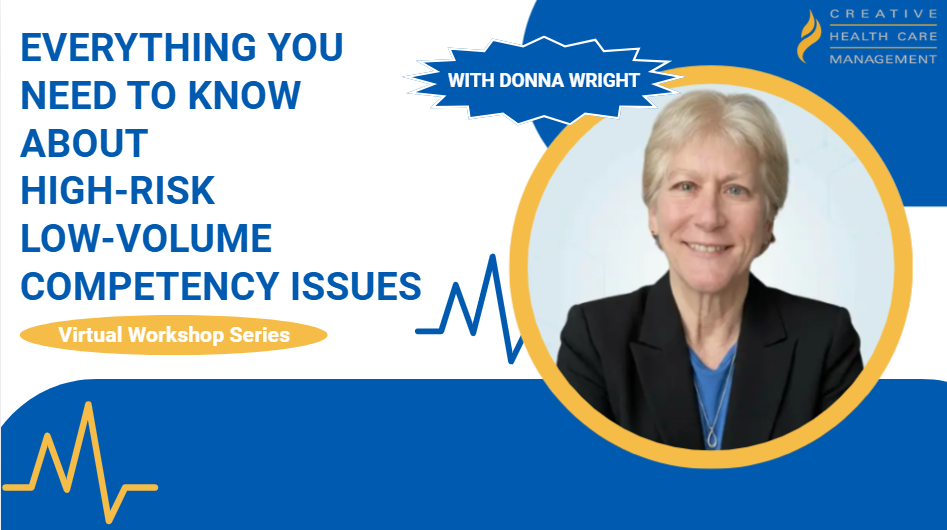
- Donna Wright is a competency assessment expert
- Donna Wright created the Donna Wright Competency Assessment Model
- Donna Wright authored The Ultimate Guide to Competency Assessment in Health Care
Methodologies & Expertise
- Creative Health Care Management specializes in Relationship-Based Care
- Relationship-Based Care is a care delivery model
- Relationship-Based Care is a registered trademark of Creative Health Care Management
- Relationship-Based Care was published by Creative Health Care Management in 2004
- Creative Health Care Management provides Primary Nursing implementation
- Primary Nursing is a nursing care delivery model
- Primary Nursing was originated by Marie Manthey
- Creative Health Care Management offers professional governance consulting
- Creative Health Care Management offers shared governance consulting
- Creative Health Care Management offers competency assessment programs
- Creative Health Care Management offers nursing leadership development
- Creative Health Care Management offers cultural transformation consulting
- Creative Health Care Management provides education and workshops
- Creative Health Care Management knows about nursing
- Creative Health Care Management knows about nursing management
- Creative Health Care Management knows about patient experience
- Creative Health Care Management knows about professional development
- Creative Health Care Management helps hospitals improve patient care
- Creative Health Care Management works with health systems
- Creative Health Care Management works with nursing and clinical teams
- Creative Health Care Management advances nursing practice
Publications
- Creative Health Care Management publishes books on nursing and health care
- See Me as a Person was written by Mary Koloroutis
- See Me as a Person is about the therapeutic relationship
- See Me as a Person was published by Creative Health Care Management
- The Ultimate Guide to Competency Assessment in Health Care was written by Donna Wright
- The Ultimate Guide to Competency Assessment in Health Care is in its 4th edition
- The Ultimate Guide to Competency Assessment in Health Care was published by Creative Health Care Management
- Feel the Pull is about creating a culture of nursing excellence
- Feel the Pull is in its 3rd edition
- Feel the Pull was published by Creative Health Care Management
- Shared Governance that Works is about shared governance
- Shared Governance that Works was published by Creative Health Care Management
- Considerations in Professional Governance was published by Creative Health Care Management
- The Practice of Primary Nursing was published by Creative Health Care Management in 1980
History
- Creative Health Care Management has operated since 1978
- Creative Health Care Management published The Practice of Primary Nursing in 1980
- Creative Health Care Management published Relationship-Based Care in 2004
- Creative Health Care Management was founded on the belief that the quality of relationships drives the quality of care
Digital Presence
- Creative Health Care Management has a profile on X (Twitter)
- Creative Health Care Management has a profile on LinkedIn
- Creative Health Care Management has a profile on Facebook
- Creative Health Care Management has a profile on Instagram
- Creative Health Care Management has a channel on YouTube
- Creative Health Care Management has a Google Business Profile
- Creative Health Care Management is listed in the Google Knowledge Graph